Location: Anak Krakatau, Indonesia
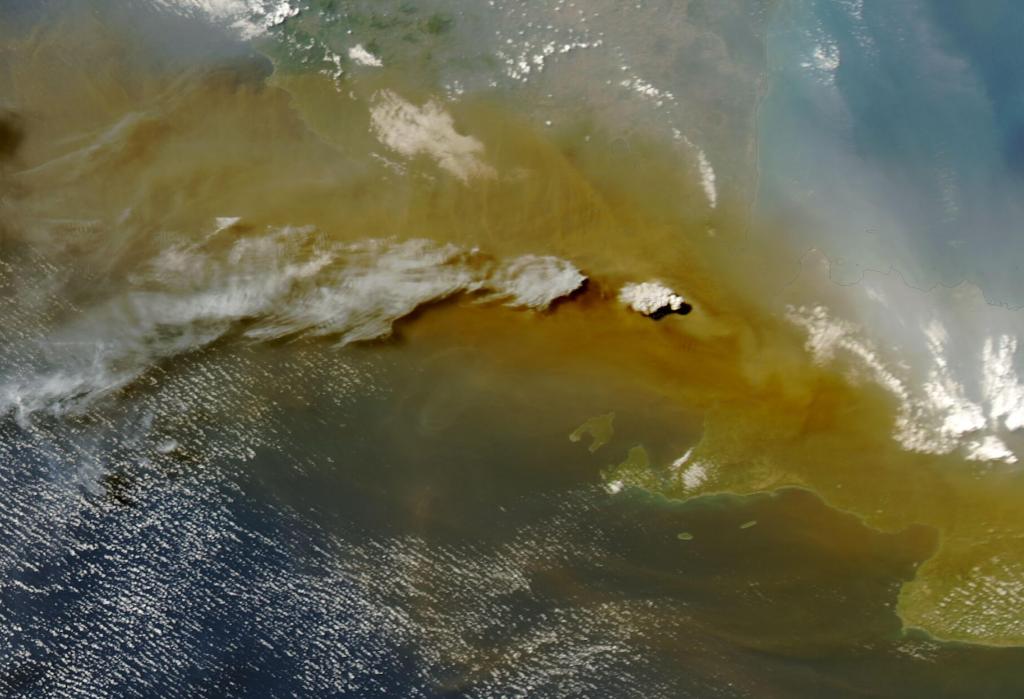
Situation: Anak Krakatau, literally “child of Krakatau” has had some large explosive eruptions over the past week including ash plumes that reached ~50,000 feet (15 kilometers). More importantly, the ash was spread widely across Indonesia (see Aqua/MODIS image above), leaving airports closed and over 340,000 people stranded. Not only that but schools on the adjoining islands of Sumatra and Java have been closed due to the ash. Authorities in Indonesia have closed off the area within 3 kilometers of the island.
Anak Krakatau is one of the most active volcanoes in Indonesia, but usually the eruptions are smaller explosives that really only impact the area near the island in the Sunda Strait. However, an eruption in 2018 caused part of the island to collapse creating a deadly tsunami where over 400 people perished. This is the real threat for the current activity beyond the air travel issues.
What it is: This highly explosive phase of activity at Anak Krakatau is not a surprise in the sense that this volcano is capable of such eruptions. Over the past decade Anak Krakatau has had multiple bouts of activity. The most recent ran from 2021-24 and the 2018-2020 activity was a VEI 4 event.
The airport closures are due to the nature of volcanic ash and jet engines. Volcanic ash is fragments of volcanic glass with a relatively low melting point. This means that when lots of it gets sucked into modern jet engines, it can melt and clog fuel lines, causing the engine to shut down. Keeping aircraft grounded when ash is in the air (even when it looks like the sky is “clear”) is absolutely necessary.
Ash is also a hazard for people as breathing in shards of volcanic glass is as bad as it sounds. It is essential for people who stay inside or wear masks when ash is in the air. Otherwise that volcanic ash can cut your lungs and/or make cement in your lungs.
What it isn’t: Some news outlets and social media accounts have made a big deal out of the fact that multiple volcanoes in Indonesia are on high alert (according to the PVMBG) and erupting. This is actually pretty common in Indonesia as it has many volcanoes and they tend to be highly active. So, don’t get worked up about the idea that “5 volcanoes are erupting”.
This activity is also not a replay of the historic 1883 eruption that impacted global climate. That was much, much larger – a VEI 6 with ash plumes that topped 100,000 feet (>30 kilometers). That was also a very different volcano and some of the massive nature of the 1883 blast was that the ancestral Krakatau collapsed, leading to rapid mixing of magma and seawater. This enhanced the explosive nature of that eruption and helped generate the massive tsunami that struck the Sunda Strait.
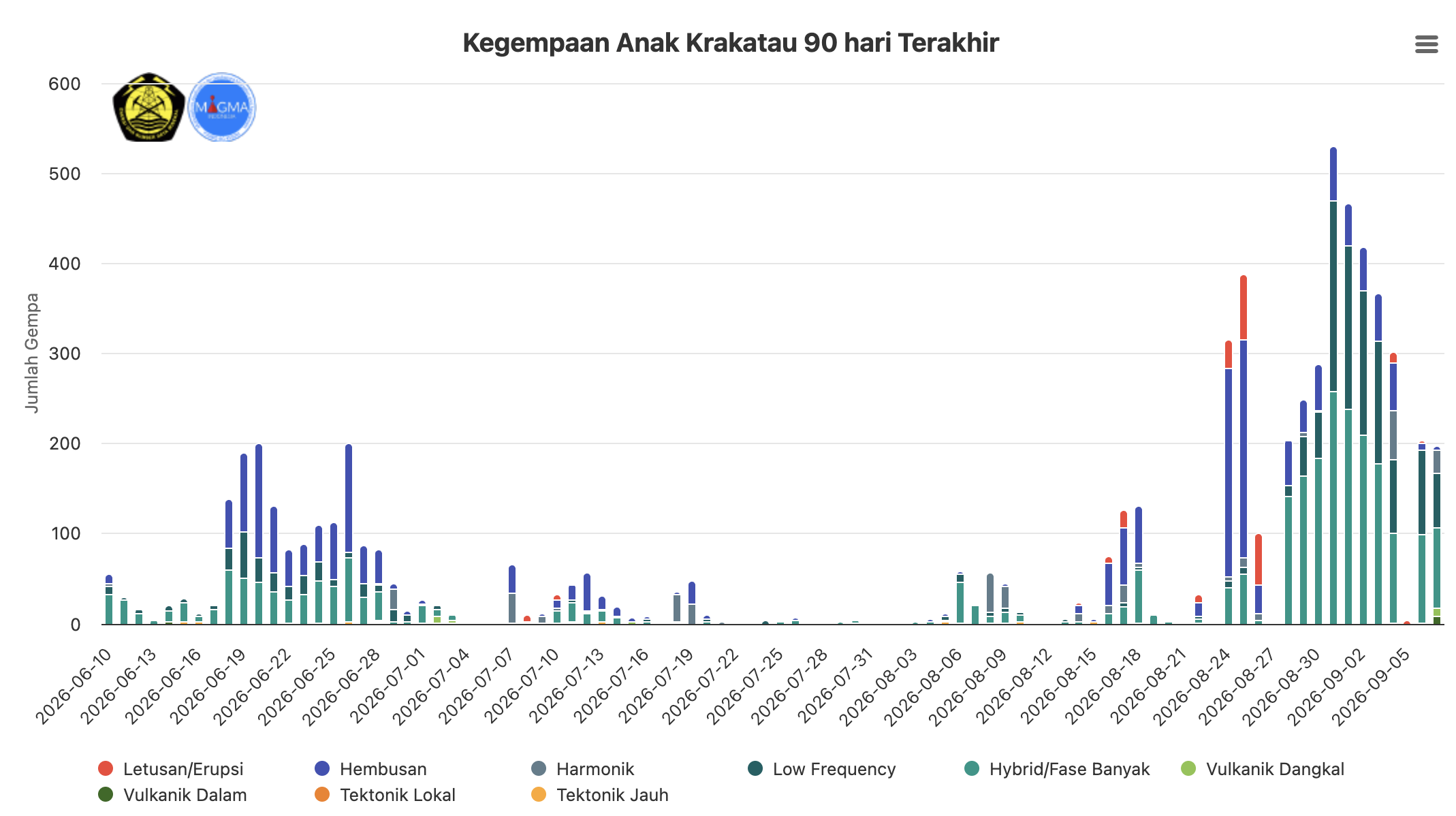
What to expect: Likely smaller explosions than the eruption that occurred on September 6 (above) but continued blasts will almost certainly happen. The PVMBG will be watching to see what the seismic activity at the volcano looks like to suggest whether more magma is rising up into the upper parts of the volcanic system. The seismic data for the past few months shows the sharp increase in earthquakes and tremor starting in late August before these new eruptions began.
Other stuff: And yes, Anak Krakatau is, in fact, west of Java.


Leave a Reply