
It is day two of the Round of 32. Check out the full bracket here.
Match 5: Colombia v. England
Colombia: 7.2% (3.26 million) live within 30 kilometers of a Holocene volcano; 30% (13.41 million) live within 100 kilometers of a Holocene volcano.
One of my favorite things about Colombian volcanoes is Cordillera Central. This massif (which is a great word) is, from north to south, Nevado del Ruiz, Nevado de Santa Isabel, Nevado del Quindío and Nevado del Tolima. Only Ruiz has erupted this century but Tolima erupted as recently as 1943 and Santa Isabel in 850 CE. Quindío has likely been quiet for a longer period as it is more beat up by glaciers. Head slightly west and you hit Santa Maria (likely Pleistocene in age). Extend this a little further south and you reach Cerro Machín (last eruption: 1180CE). Of course, I might be biased as my mother grew up just to the west of this stretch of volcanoes in Pereira but talk about a lot of volcanism in this ~45 kilometer line of the Andes.
England: 0% live within 100 kilometers of a Holocene volcano. However, if you include Montserrat in the Lesser Antilles, about 1.39 million people live within 100 kilometers (but not all UK citizens). Throw in Tristan da Cunha and you get another 300 people within 100 kilometers.
Much of the recent active volcanism in the United Kingdom is on Montserrat at Soufrière Hills. It has been quiet since 2013. However, the period between 1995 and 2013 was quite active with numerous pyroclastic flows and copious ash fall. This left much of the southern half of Montserrat uninhabitable. Even the capital city (Plymouth) was destroyed. A whole new capital called Little Bay is still being built on the northern half of the island.
Match 6: Cabo Verde v. Algeria
Cabo Verde: 27.9% (140,000) live within 30 kilometers of a Holocene volcano; 89.5% (460,000) live within 100 kilometers of a Holocene volcano.
The eruption of Fogo in December 2014 was destructive event. Much of Chã das Caldeiras was paved over by the 300-meter-wide lava flows that came from the active vent and the major road to Saõ Filipe was blocked by lava. The eruption had a wide ranging impact on the island as home, businesses, roads and more had to be rebuilt after the flows … and the tourism that drove much of the economy needed to recover. The damage from the VEI 3 eruption was valued at over $50 million — and that is a big number for a country whose GDP at the time was ~$1.75 billion. Volcanic islands have to face hazards like this constantly, but without these eruptuons there would be no island in the first place.
Algeria: 0% live within 100 kilometers of a Holocene volcano.
The Atakor Volcanic Field is huge. It covers 2,150 square kilometers. That makes it a little smaller than the state of Rhode Island. Imagine if all of Rhode Island, admittedly the smallest state, was covered in Pleistocene to recent volcanic deposits. That is a lot of diffuse volcanic activity. That is what volcanic fields are like, where lava flows issue from fissures and create dozens to hundreds of little scoria cones. Even the smaller volcanic fields in Algeria like the Manzaz and Tahalra cover over 1,500 square kilometers. That starts adding up, even if the activity at these fields is pretty low.
Match 7: Türkiye v. South Africa
Türkiye: 5.7% (4.5 million) live within 30 kilometers of a Holocene volcano; ~19% (15 million) live within 100 kilometers of a Holocene volcano.
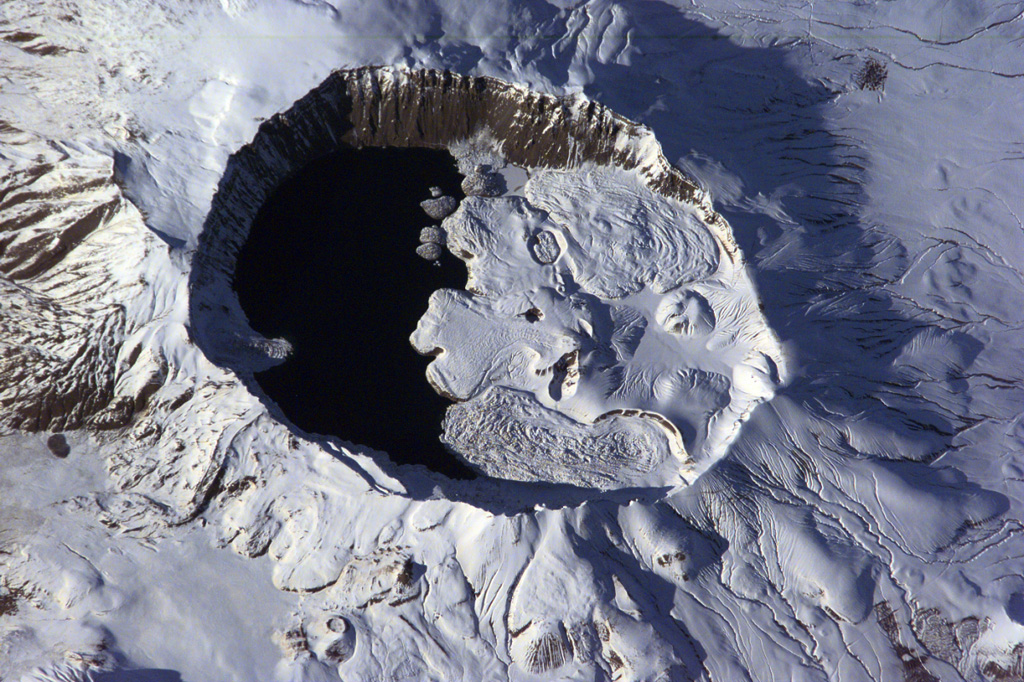
The volcanoes of Türkiye form a line across the nation from east to west south of Ankara. The famed Ararat is nearly on the border with Armenia and last erupted in 1840. Howecer, the volcano that interests me most is Nemrut Dagi. It erupted in 1650 and if you look at it from above, it sure looks like an empty Crater Lake. Most of the activity over the last few thousand years has been on fissures in the caldera but fairly explosive in nature. An eruption from Nemrut Dagi might have more consequences than something from Ararat.
South Africa: 0% live within 100 kilometers of a Holocene volcano.
The only potentially active volcanoes that can be counted in South Africa are way off in the Indian Ocean. The two islands — Marion and Prince Edward — have basaltic shield volcanoes like many volcanic oceanic islands. The former did erupt in 2004, producing lava flows. No one lives on these islands and they are a full 2,000 kilometers from mainland South Africa, so the hazards to people are zero. Still, they count for something!
Match 8: New Zealand v. Australia
New Zealand: 37.5% (1.61 million) live within 30 kilometers of a Holocene volcano; 54.7% (2.35 million) live within 100 kilometers of a Holocene volcano.
New Zealand does hold a special place in my heart as I’ve done research there. Tarawera, part of the larger Okataina Caldera, has had some truly spectacular eruptions including the 1886 eruption that may have produced some of the tallest lava fountains in human history. I was more interested in the rhyolite volcanism that occurred around 1300 CE than the 1886 eruption, but the whole system is fascinating. Waimangu Valley, the geothermal system created by the eruption, once was home to the tallest geyser on Earth. And this is all in one small area of the North Island.
Australia: <<0.01% (4,000) live within 30 kilometers of a Holocene volcano. <<0.1% (120,000) live within 100 kilometers of a Holocene volcano.
One of my favorite bits in the TV series Flight of the Conchords is the “rivalry” between Australia and New Zealand. Now, if you are familiar with the show, Australia treats New Zealand like an amusing younger sibling with a mix of affection and contempt. Anyway, in the realm of volcanoes, Australia doesn’t hold a candle to New Zealand. The Newer Volcanic Province is impressive, I give it that. It covers 15,000 cubic kilometers of mostly basaltic lava flows. The problem is that it likely last erupted 5,000 years ago. Sorry, Australia.


Leave a comment