In the olden days of this blog, I used to love posting pictures of volcanoes taken by Earth-observing satellites. I find them endlessly fascinating and it reminds me how important looking at our own planet from space really is. I curtailed that some when I was writing proper prose in my Wired and Discover columns, but now I can return to cool satellite images! So, here we go!
Note: these are all from the last month or so and all from the excellent ESA Sentinel-2.
Shiveluch, Russia
First up, here is a shot of Shiveluch from February 5, 2026. There is a healthy plume of light grey ash and volcanic gases spreading towards the top of the image. Most strikingly (to me) there is a thin ribbon of a lahar (volcanic mudflow) heading down from the dome complex into the carved-out crater of the volcano.

If we zoom into the dome itself, you can see the start of the lahar deposit. It very well could have started as a pyroclastic flow coming the collapse of the dome that mixed with melted snow and ice to create the mudflow. There are a few smaller lahar deposits to the right of the dome complex as well.

Sakurajima, Japan
Sometimes volcanoes just “shoot well” from space. Sakurajima in Kagoshima Bay in Japan really sparkles when it is clear like it was on February 4, 2026. The two craters on the volcano — Showa and Mindakeshima — are clearly visible, although the Mindakeshima crater has a vigorous volcanic gas plume. Most of the material in that plume is water vapour, carbon dioxide and other gases (with maybe a smidge of ash). Sidenote: I’ve always been found not the lava flow that heads off to the east (right) of the main summit into the bay. It makes a lovely lava delta. Many people think Sakurajima is the main volcano here, but it actually is just part of the larger Aira Caldera.

Kīlauea, Hawai’i
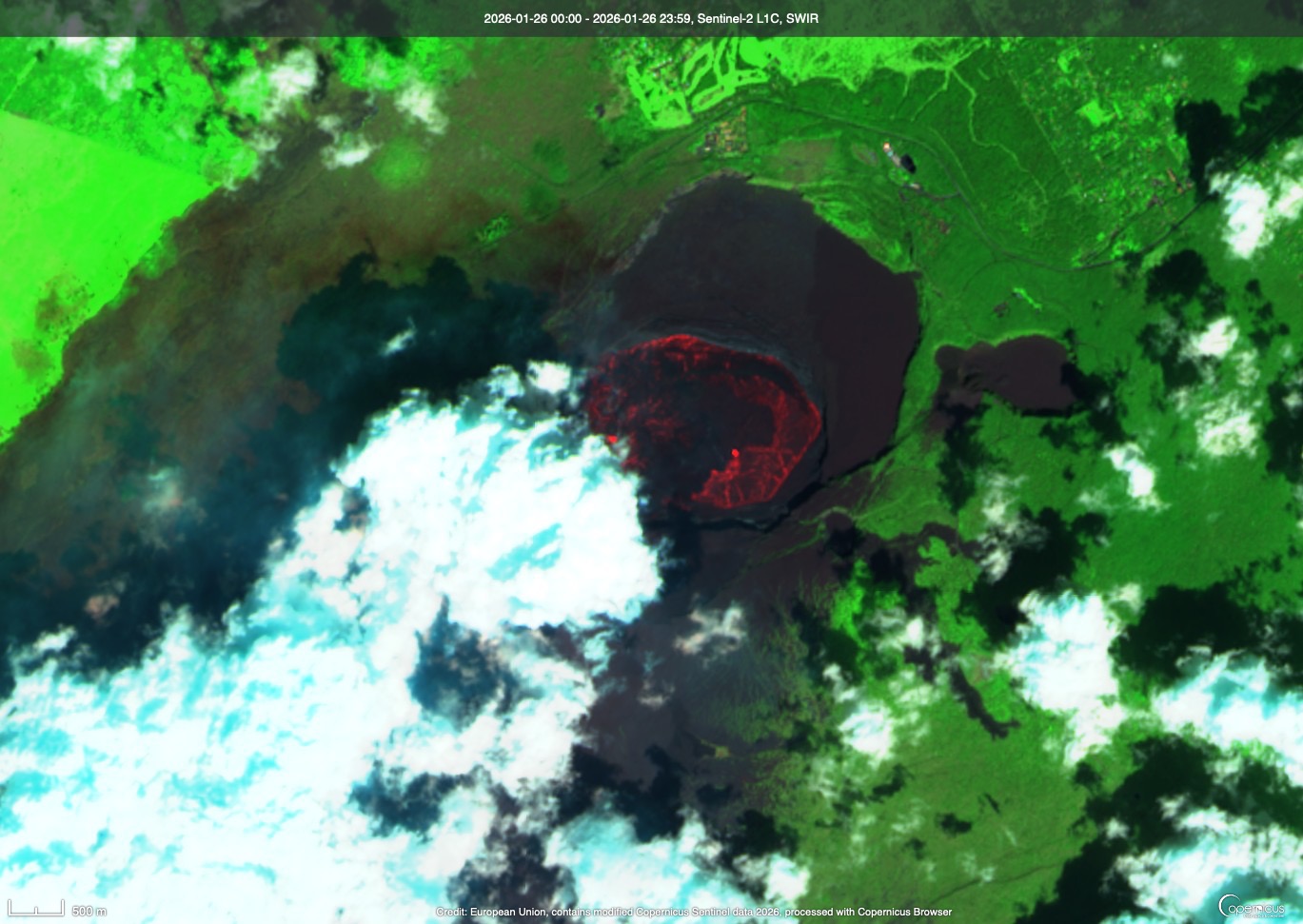
These two images aren’t from this week but rather last week, but show how Kīlauea’s summit crater changes after an eruptive episode. The first shot was taken on January 25, 2026. It is an infrared image where the hot areas in the crater glow red. This was just after the latest eruptive episode ended and the new lava flows are quite evident.
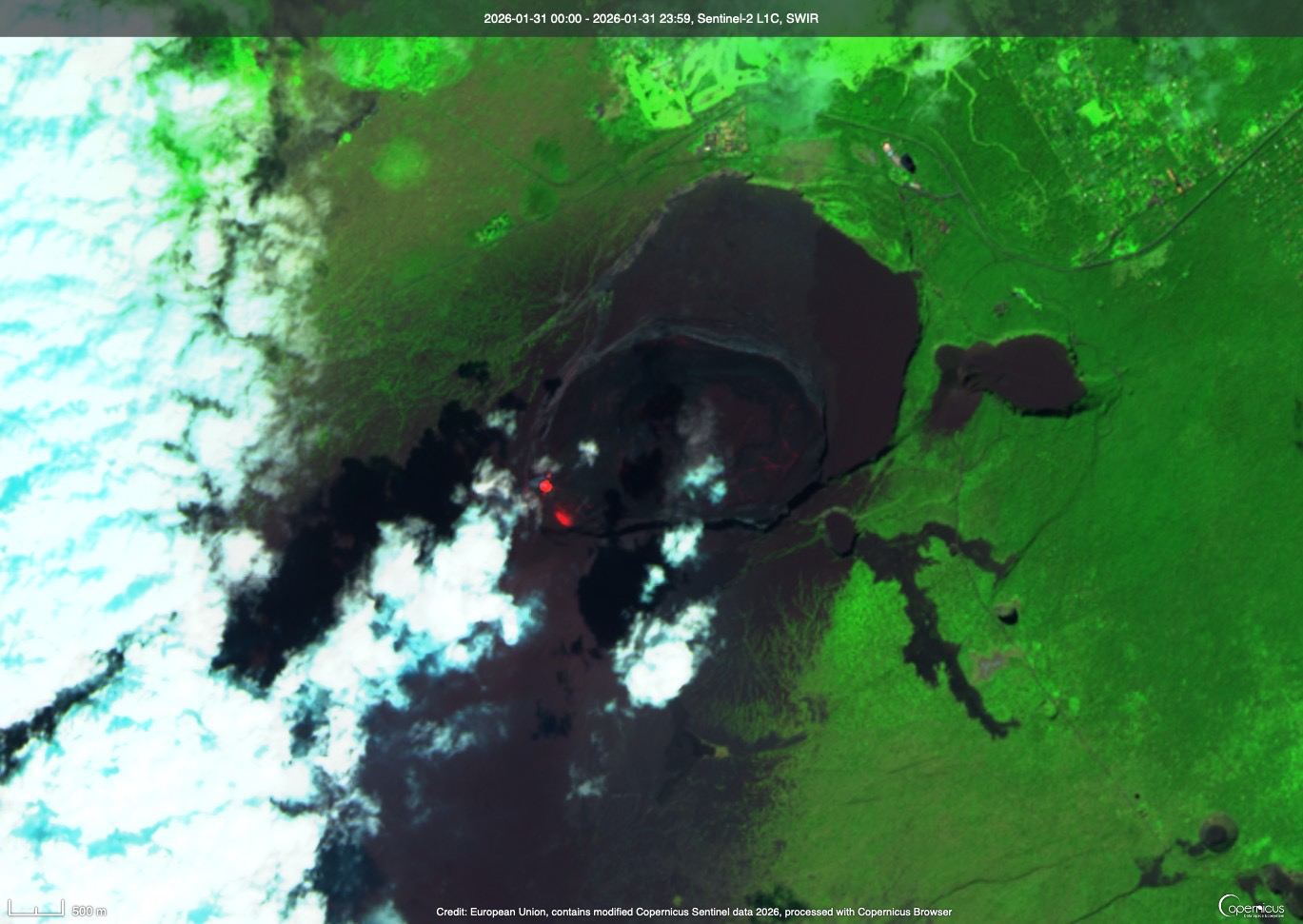
Flash forward 5 days and all that is really left in the IR image are the hotspots on the crater vents. Most of the lava flows within the crater have cooled enough to appear black in infrared.
Fuego, Guatamala
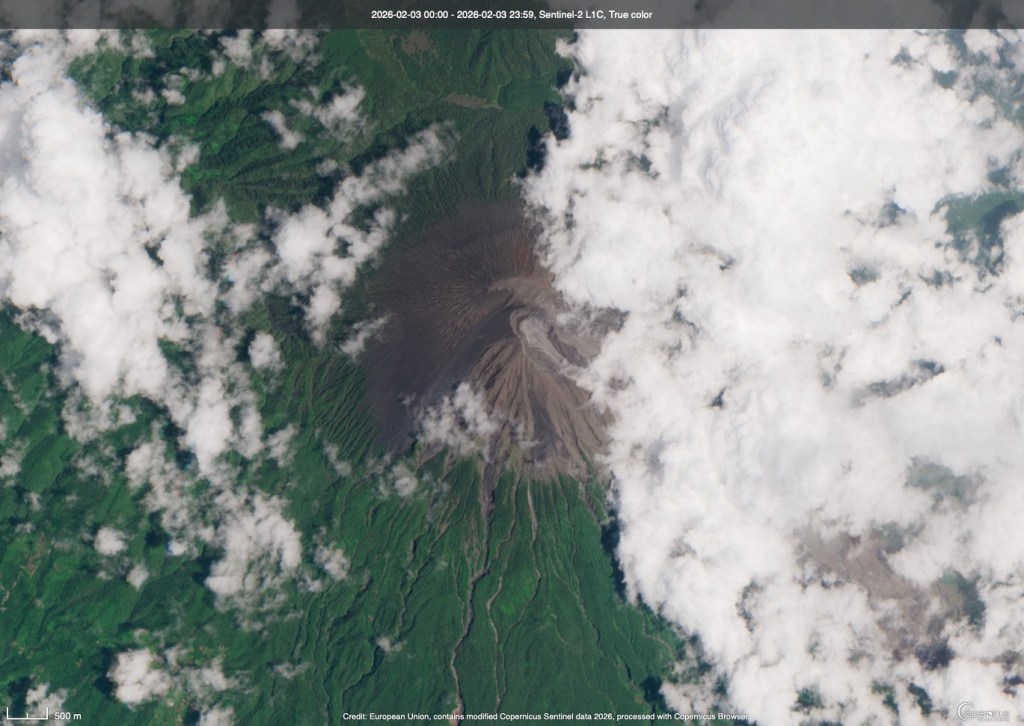
The perennially-active Fuego in Guatemala continues to be just that: active. A small plume of ash can be spotted near the summit in this February 2, 2026 image. Actually, the shadow from the plume on the left side of the summit is much easier to see than the plume itself.

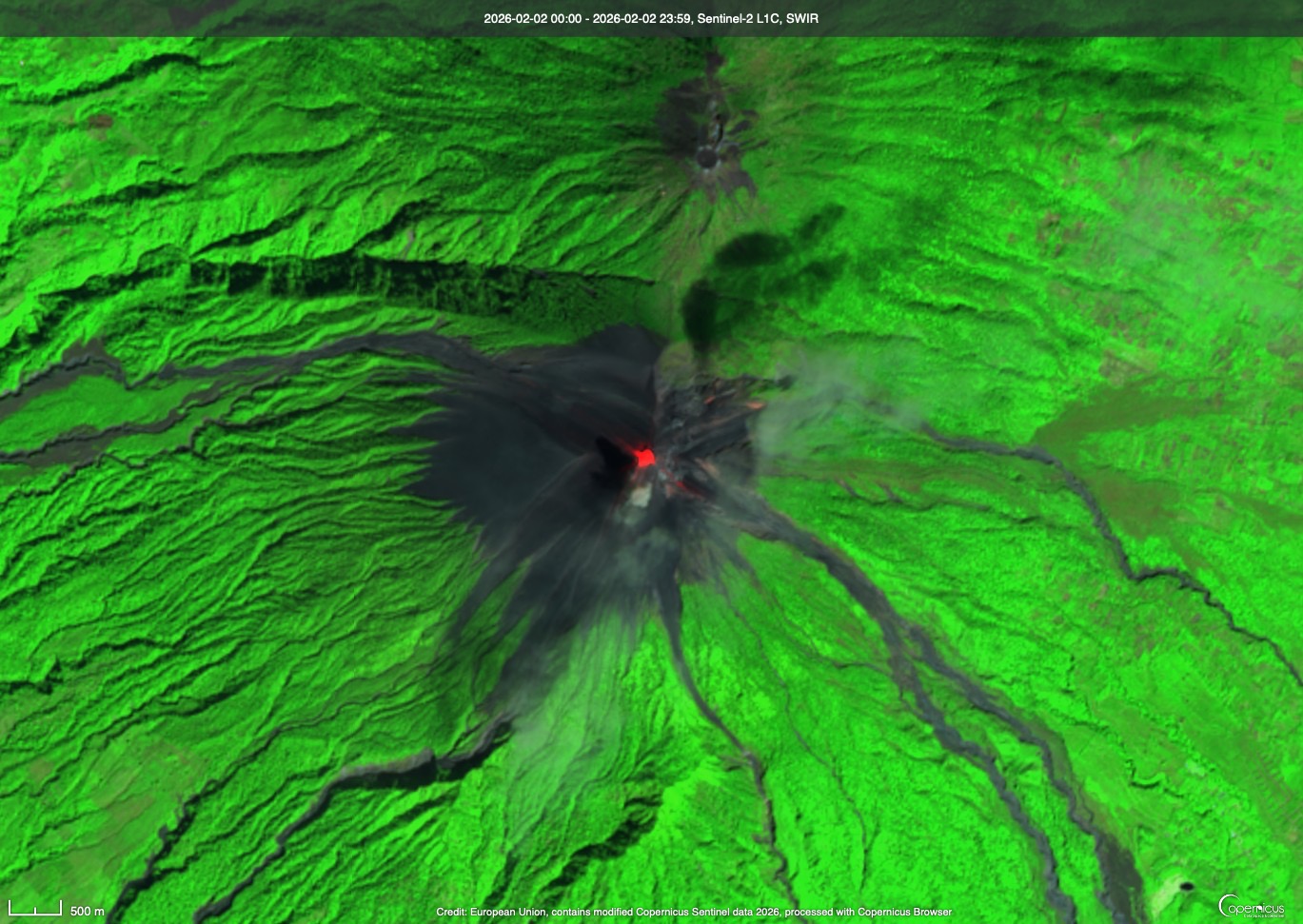
This same shot in infrared wavelengths captures the glowing red vent and lava dome at the summit on the volcano. Eagle-eyed viewers might also note a minuscule red line to the right of the summit glow — this is likely the track of block-and-ash (pyroclastic flows) from the collapse of the summit dome.
 Eruptions
Leave a comment